
WELCOME

Communion Worship Service
Good morning First Baptist. We welcome you to worship this morning. Be sure to remember your brothers and sisters in Christ throughout the week as you pray for them, and as the Holy Spirit brings their faces to your mind. Be sure to also connect with them in the ways that are possible. And if you have any questions or would like to talk to someone, please don’t hesitate to contact the church through the church telephone and leave a message. (519-733-4144)
Songs
Call to Worship
We come today aware of how fragile life can be. We carry joys and worries, hopes and uncertainties, questions and longings. And in all of it, God invites us to seek wisdom, not easy answers, but deep trust. Ecclesiastes reminds us that life is complex, fleeting, and often beyond our control.
Yet even here, God offers a better way: to walk humbly, to live attentively, to act justly, and to receive each moment as a gift. So today, we gather to listen. To reflect. To worship the God who holds our fragile lives with steady grace. Come let us worship God together.
Songs
Prayer
CONFESSION:
God of grace, we admit that we don’t always live wisely. We rush. We worry. We try to stay in control. We speak before we listen. We chase what doesn’t last and neglect what matters most. Forgive us for the ways we miss your way. Slow us down. Open our hearts. Teach us how to live with humility, courage, and trust. In silence, we bring you what weighs on us. Amen.
WORDS OF ASSURANCE:
Here is the good news: God meets us with mercy, not shame. In Christ, we are forgiven, renewed, and set free. Our past does not define us. God’s grace does. So receive this grace. Breathe deeply. And walk forward in hope. Amen.
Don't Settle: Finding a Meaningful Life
Wisdom for a Fragile Life
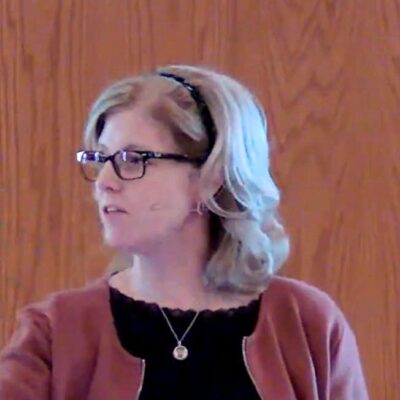
Today's Message: Pastor Laura Gaffan
My grandfathers were very interesting people. Very different from one another, but incredibly wise. My grandpa Ware grew up on a farm, and he helped to instill in me a love of the garden. I learned when to prune roses and which foods, when added to the compost, would make the worms sick. I learned the cycle of planting, weeding and harvesting. My grandpa Ouellette was one of the last lighthouse keepers on Lake Erie, and that man could stand in the yard, look at the lake, and tell you by the colour of the water what the weather would be that day. I remember wanting to use the boat with my cousins one very sunny, still afternoon. My grandfather warned us to stay close because he could tell we were in for stormy weather within the next two hours. We were very skeptical because it was such a beautiful day, but we knew better than to ignore him. He was also a fantastic storyteller, and I had heard one too many stories of people lost on the lake. Sure enough, as we pulled the boat to shore an hour later, the sky had turned dark and we were relieved to be safe in the house before the rain and wind showed themselves powerfully. Interestingly, they both taught me how to catch earth worms in the dark of night for fishing! I have benefitted greatly from their wisdom, and I know I still heed and share with my children and grandchildren to this day, my grandpa Ware’s gardening wisdom and my grandpa Ouellette’s weather wisdom acquired through decades of life experience.
This morning, we will pick up where we left off in Ecclesiastes last week, where Pastors Dave and Marlee challenged us to examine the areas where comparison has left us feeling less than. Where our dissatisfaction with our own resources has caused us to over work, over think and over consume. The answer, rest in God, the source of our need.
This morning, we rejoin Solomon as he takes us into a deeper dive. From the beginning of the book, he has been trying and often failing to figure out what really matters in this life. “It is all vanity or chasing after the wind” he proclaims time and again. Yet what of wisdom, the only thing he had asked God for?
As a reminder, let’s take a peek at 1 Kings Chapter 3
Scripture Reading: 1 Kings Chapter 3
5 At Gibeon the Lord appeared to Solomon in a dream by night; and God said, “Ask! What shall I give you?”
6 And Solomon said: “You have shown great mercy to Your servant David my father, because he walked before You in truth, in righteousness, and in uprightness of heart with You; You have continued this great kindness for him, and You have given him a son to sit on his throne, as it is this day. 7 Now, O Lord my God, You have made Your servant king instead of my father David, but I am a little child; I do not know how to go out or come in. 8 And Your servant is in the midst of Your people whom You have chosen, a great people, too numerous to be numbered or counted. 9 Therefore give to Your servant an understanding heart to judge Your people, that I may discern between good and evil. For who is able to judge this great people of Yours?”
10 The speech pleased the Lord, that Solomon had asked this thing. 11 Then God said to him: “Because you have asked this thing, and have not asked long life for yourself, nor have asked riches for yourself, nor have asked the life of your enemies, but have asked for yourself understanding to discern justice, 12 behold, I have done according to your words; see, I have given you a wise and understanding heart, so that there has not been anyone like you before you, nor shall any like you arise after you. 13 And I have also given you what you have not asked: both riches and honor, so that there shall not be anyone like you among the kings all your days. 14 So if you walk in My ways, to keep My statutes and My commandments, as your father David walked, then I will lengthen your days.”
Solomon asked for wisdom and God had honoured that request by not only making him the wisest man to ever live, but the wealthiest as well. But by 1 Kings, 11:4 where we read,
“As Solomon grew old, his wives turned his heart after other gods, and his heart was not fully devoted to the LORD his God, as the heart of David his father had been.”
Somewhere in the 8 chapters between these passages, Solomon’s eyes had been drawn from God to the wealth and opportunity for pleasure his life could afford.
Three of the wisdom books in our bible are attributed to Solomon. I like to think of young Solomon writing Song of Songs in energetic days of youth, pursuing one of his 700 wives or 300 concubines. Which doesn’t sound wise to me! Proverbs sounds like those middle age years when we are beginning to look back and see the folly of our youth.
Ecclesiastes sounds like old and grouchy Solomon sitting on his front porch, shaking his fist at the youth and their foolish ways!
With this in mind, our observations of the first part of the book read like the wisdom of an older man reflecting on his life with the brutal honesty built from a life of having been there, done that and now is trying to save us a trip.
As Pastors Dave & Marlee told us a couple of weeks ago, his wealth would have totaled over 3 trillion dollars. Absolutely no experience would have been beyond his reach. Where you and I may dream about trips, Solomon didn’t have to dream. He spoke the words and made it so. But his verdict is constant through this book. Meaningless, it is all meaningless. As a matter of fact, he tells us toward the end of chapter 6,
“Enjoy what you have rather than desiring what you don’t have. Just dreaming about nice things is meaningless-like chasing the wind.”
There is beauty in enjoying what the world has to offer. But somewhere along the way he has made the good thing the God thing. It had become idolatry.
At the end of Chapter 6, we find Solomon, our teacher, in his signature mournful mood as he considers the meaninglessness of life in a world without eternity and accountability in the world beyond. There is a shift In Chapter 7. He breaks out in these proverbs of wisdom; things he would like us to heed as we too consider our lives in light of eternity.
As you listen to the serious tone and theme, this is the futility of life from a limited perspective.
Listen to the first few verses from Chapter 7: This section is entitled Wisdom
A good name is better than precious ointment,
And the day of death than the day of one’s birth;
2 Better to go to the house of mourning
Than to go to the house of feasting,
For that is the end of all men;
And the living will take it to heart.
3 Sorrow is better than laughter,
For by a sad countenance the heart is made better.
4 The heart of the wise is in the house of mourning,
But the heart of fools is in the house of mirth.
5 It is better to hear the rebuke of the wise
Than for a man to hear the song of fools.
6 For like the crackling of thorns under a pot,
So is the laughter of the fool.
This also is vanity.
You may have found this jarring, and I wonder if that is the point. Perhaps this is a last effort to almost shake sense into us. A good name, a wise name is better than a fine fragrance or ointment. Why this strange comparison? Fragrance fades, the ointment will go into the skin and be gone. We humans tend to be more interested in the exterior of things, how it looks, much more than character or our very souls.
He sounds cynical, but again he is emphasizing he has lived the thing. Unlimited wealth and power. He has seen it all, done it all and realized it is all smoke and mirrors. Wealth can be taken away, stuff will break. I have some data that I want to share. Dave would be proud. Here it is: 10 out of 10 people will die. This is the futility of life under the sun. And it is this wisdom that he gives to us, the gift of not learning the hard way as he had. With this argument firmly in place, he will now, not only share his wisdom, but help us examine our own.
One of the key themes is death. It is a reminder that life under the sun is brief, a breath. This generation we live in, is characterized by all we have and all the stuff we live for, and we hate thinking about death.
I think that is why the yearly observance of lent is so important. We may not mark ourselves with ashes on Ash Wednesday, but we are already marked and it is in this space that we are reminded that from dust you came and to dust you will return.
Solomon is right, life in this world without the hope of eternity and accountability in the world beyond IS meaningless, hopeless really.
“4 The heart of the wise is in the house of mourning, but the heart of fools is in the house of pleasure.”
Many of us can attest to the truth that there is wisdom to be found more often in mourning and suffering. In sadness, our hearts tend to be more open to wisdom and some of greatest times of growth come in the seasons of suffering. But when the suffering is hard or doesn’t seem to end, if we are not careful, we begin to doubt God’s goodness and when this happens, we will lean on our own self sufficiency and wisdom. Lived without God, this is truly meaningless and leads us to emptiness and frustration. This is Solomon’s warning.
He continues in Chapter 7:11-12,
“Wisdom, like an inheritance, is a good thing and benefits those who see the sun. Wisdom is a shelter as money is a shelter, but the advantage of knowledge is this: Wisdom preserves those who have it.”
And the NLT reads, “but only wisdom can save your life.” To tell us that wisdom is like an inheritance, a good thing, a benefit, a shelter, is to reorient our eyes, letting God lead the way. He keeps pointing us forward to the end, which he tells us is better than the beginning! But why the comparison to money? He has already laid out for us it will not satisfy, so why? As long as we do have it, it will protect to some degree. But wisdom is a protection for the soul. Wisdom can save your life.
But we have this amazing ability to look back at the past and romanticize it. When I was younger, I adored reading the “Little House on the Prairie” series by Laura Ingalls Wilder. I imagined life out in the woods in a cozy cabin with Pa whittling by the fire and Ma baking biscuits in the fireplace, but life at that time was not easy! I don’t have to go out to the pump to get water each morning or fear that a lantern, my only source of light at night, might be knocked over and burn the house down. Solomon warns us about this as well: 10 Do not say, “Why were the old days better than these?” For it is not wise to ask such questions.”
Clearly, there are no good old days for Solomon! I think he knows we will get stuck there and points our eyes forward to the end that he tells us is better than the beginning. In Chapter 8, he gives us insight into wisdom itself beginning. In verses 14-18,
“Here is something else meaningless that occurs on earth: the righteous who get what the wicked deserve, and the wicked who get what the righteous deserve. This too, I say, is meaningless.
So I commend the enjoyment of life, because there is nothing better for a person under the sun than to eat and drink and be glad. Then joy will accompany them in their toil all the days of the life God has given them under the sun.When I applied my mind to know wisdom and to observe the labor that is done on earth—people getting no sleep day or night — then I saw all that God has done. No one can comprehend what goes on under the sun. Despite all their efforts to search it out, no one can discover its meaning. Even if the wise claim they know, they cannot really comprehend it.”
This brings us to our first point;
Wisdom accepts limits.
As Solomon observes, sometimes bad things happen to good people and good things happen to bad people. No sooner has he spoken about wisdom’s strength than he tells us how hard wisdom is to find. I can’t help but wonder if being known as the wisest man to ever live and have people come from everywhere to seek your wisdom would not in and of itself be a trap. The Queen of Sheba had travelled over 2,400km because of the renown of Solomon’s wisdom. It would be hard not to find your identity in this, until you found that your wisdom, the very thing you were famous for, did not work in every situation.
Case in point, Proverbs 26:4-5 reads,
4 “Don’t answer the foolish arguments of fools, or you will become as foolish as they are. 5 Be sure to answer the foolish arguments of fools, or they will become wise in their own estimation.”
Ok Solomon, which one is it? And yes, I know the goal of these proverbs is to prevent us from falling into the foolishness of others, but do I answer a fool or not? We often remind each other in ladies bible study that the proverbs are principles and not promises, so discernment is the key, and that key is only available from God.
Those of us ladies who are currently working through “The Way of Wisdom” bible study have been immersed in what is arguably the key verse of not only proverbs, but Ecclesiastes. “The fear of the LORD is the beginning of wisdom, and the knowledge of the Holy One is understanding.” Wisdom is useful and important, it is necessary, but, in some respects, wisdom puts the emphasis on us and what we do, if we are not careful, we will view it as an accomplishment on our part: human work. Solomon had asked God for wisdom and God had honoured that request in the way only God can, generously, abundantly. but one thing Solomon stresses seven times in this book is, “the fear of the lord is the beginning of wisdom.” This takes the accolades out of our hands. Our ultimate responsibility in seeking wisdom from God is to remind ourselves that HE is the source. God is sovereign and holy, righteous and wise. In our fear, we recognize all of these things and in humility admit, we are NOT the source of wisdom or goodness in and of ourselves. This is a proper fear of the LORD. To know our rightful position before our very holy God.
Seven times in this book, he implores us to fear God. And each time you read it, he has been running through yet another list about the meaninglessness of experience, or stuff or people and he stops to reorient himself. God in His proper position and our fear or reverence for Him is the only thing that has lasting, eternal value.
It will be the key to our enjoyment and fulfillment and satisfaction in this “under the sun” life. We recognize Who has given these things and to Whom we will give an account to. It is not a fear that causes a fight or flight response. It is a fear that is attractive. The kind of fear that makes a child want to be like their parent. This fear is a reverent affection, a submission to the law and plans God has for us. We humbly let Him lead. As Paul tells us in 1 Corinthians 1:30,
“God has united you with Christ Jesus. For our benefit God made him to be wisdom itself. Christ made us right with God; he made us pure and holy, and he freed us from sin.”
Jesus is our wisdom. Jesus tells us in the book of John,
“I have told you all this so that you may have peace in me. Here on earth, you will have many trials and sorrows. But take heart, because I have overcome the world.”
Take heart or have courage, in this we rest assured because Jesus not only overcame the world but sin and death itself and while we are here, He is also the source of our wisdom. In this truth we find freedom and our second point:
Wisdom risks, loves and gives anyway.
Giving our lives to Jesus, and all of His wisdom is the wisest decision that we will ever make. Our future is totally secure. Even though our days are numbered here, and we cannot be certain of what happens, we have a loving saviour who will be with us to help us and care for us. To trust Him is to be held fast in His hands, and that is the wisest place for us to be. Solomon is asking us to trust, that we are not able to understand or remedy the puzzles of life, but to trust the One who does. Solomon brings the puzzle up over and over, and in doing so, points out how limited and finite we are in light of our infinite God. The answer to it all is trust.
He is God, you are not.
Wisdom trusts God with the outcome.
Life is challenging, but live your life, not trying to figure out every puzzle. He is telling you to enjoy the very brief trip in Ecclesiastes 9 starting in verse 5,
“The living at least know they will die, but the dead know nothing. They have no further reward, nor are they remembered. Whatever they did in their lifetime—loving, hating, envying—is all long gone. They no longer play a part in anything here on earth. So go ahead. Eat your food with joy, and drink your wine with a happy heart, for God approves of this! Wear fine clothes, with a splash of cologne!
Live happily with the woman you love through all the meaningless days of life that God has given you under the sun. The wife God gives you is your reward for all your earthly toil. Whatever you do, do well. For when you go to the grave, there will be no work or planning or knowledge or wisdom.”
Enjoy the spouse of your youth, enjoy your work, your food! Life will provide you with very few answers, so what do we do? Eat and drink for tomorrow we die?! No! The answer is not to plunge into sin. We are to steward our lives; we don’t waste it. Even in life outside the garden, we have been given good things from God to enjoy in this fragile life.
So don’t spend your time trying to figure out every puzzle that presents itself, you can’t. Don’t live like this won’t end, it will! Solomon has been reminding us of this for nine chapters and as much as he sees the futility, the problem, the hopelessness of the “under the sun” existence, in Jesus, there is a better answer in THE Son!
“I am the gate; whoever enters through me will be saved. They will come in and go out, and find pasture. 10 The thief comes only to steal and kill and destroy; I have come that they may have life and have it to the full.”
The Greek word for abundance, perissos, has a mathematical meaning and generally denotes a surplus. The abundant life is above all the contented life, in which our contentment is based upon the fact that God is equal to every emergency and is able to supply all our needs according to His riches and glory in Christ Jesus” according to my commentary on this passage. Abundant life isn’t an especially long life. Abundant life isn’t an easy, comfortable life. Abundant life is a life of satisfaction and contentment in Jesus.
We have been given things to enjoy and to give thanks to God for, wisdom is living in the knowledge that all of this comes from Him.
From this perspective, this is a positive message. Solomon has been sailing in every direction to show us the meaninglessness of life. Now he is tacking the boat forward to the harbour of truth where we will dock next week.
God has given us these precious days. And we are to live these days wisely and to their fullest, thankful that God allows flowers to grow, that attract the bees that make the honey that sweetens my tea that I sip while listening to a friend pour out her hurt and sadness over life’s circumstances. Thankful for the friend and the house and the ears to hear but bending to God’s sovereignty and trusting Him with the beautiful, messy puzzle of it all.
Communion
Communion
Invitation to the Table
This is not our table. It is Christ’s table. Here, we do not come because we have it all together, but because we need grace. We come carrying our questions, our weariness, our hope, and our fragile faith.
At this table, God meets us with mercy, feeds us with love, and reminds us that we are not alone. So come, not because you must, but because you are invited. Come, just as you are.
Prayer of Thanksgiving and Consecration
Gracious God, we thank you for the gift of life, for breath in our lungs, and for your steady presence in a fragile world. When life feels uncertain, you remain faithful. When we lose our way, your wisdom calls us back. Pour out your Spirit upon us, and upon this bread and cup, that as we share in this meal, we may know again your forgiveness, your healing, and your renewing love. Make us one in Christ, one with each other, and one in service to the world you love. Amen.
Words of Institution
On the night he was betrayed, Jesus took bread. After giving thanks, he broke it and said, “This is my body, given for you. Do this in remembrance of me.”
In the same way, after supper, he took the cup and said, “This cup is the new covenant in my blood, poured out for you and for many, for the forgiveness of sins. Drink from this, all of you.”
Whenever we eat this bread and drink this cup, we proclaim the mystery of faith: Christ has died. Christ is risen. Christ will come again.
Sharing of the Elements
The body of Christ, given for you.
The blood of Christ, shed for you.
Prayer
Faithful God, we thank you for meeting us at this table. As we return to our lives, send us out with wisdom, with compassion, and with hope. Help us to live gently, love generously, and trust you deeply in this fragile and beautiful world. Amen.
Song
Benediction
Go into the week ahead with open hands and attentive hearts. May God grant you wisdom for each step, courage for each challenge, and grace for every fragile moment. Amen.