
WELCOME

Communion Worship Service
Good morning First Baptist. We welcome you to worship this morning. Be sure to remember your brothers and sisters in Christ throughout the week as you pray for them, and as the Holy Spirit brings their faces to your mind. Be sure to also connect with them in the ways that are possible. And if you have any questions or would like to talk to someone, please don’t hesitate to contact the church through the church telephone and leave a message. (519-733-4144)
Songs
Call to Worship
Come, let us celebrate the wondrous gifts that God has given us. Throughout all our lives, God has blessed us with love and hope. May our hearts be truly grateful, and may we show our gratitude by the ways in which we live and care for others.
Songs
Prayer
Prayer of Confession & Assurance
Almighty God: you love us,
but we’ve not loved you.
You bless us,
but we’ve not thanked You.
You call,
but we’ve not listened.
We walk away from neighbours in need,
wrapped in our own concerns.
We condone evil, prejudice, warfare, and greed.
God of grace,
help us to admit our sin,
so that as you come to us in mercy,
we may repent, turn to you, and receive forgiveness for our sins,
You are the God of
Abundance, Provision, and Plenty
Yet
So many do not have enough
So many are burdened by far too much
So many squander what they have
So many do evil to get more
The “many” include me
Lord, have mercy
Help me choose
Collaboration over competition
Gratitude over greed
Rest over hustle
Generosity over fear
Help me choose You and Your ways, always.
Amen
Assurance of Pardon:
Place your trust and hope in God who lavishly provides for you and who calls you beloved. Rejoice, for God is with you. AMEN.
Thanksgiving
Gratefulness
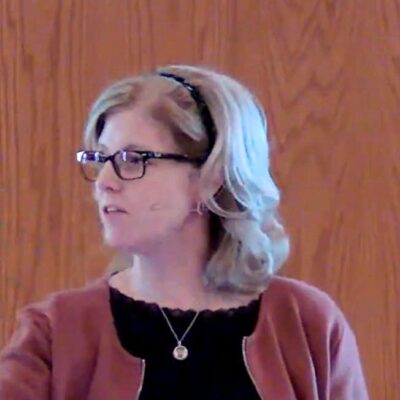
Today's Message: Laura Gaffan
This morning I would like to share a bit of my journey over the past few weeks. This is a level of truth that is hard. Actually, it is terrifying, but that is why I am meeting you here, behind this table. As Pastor Dave and Pastor Marlee taught us so beautifully last week, this is a table of confession, but it is also a table of community, of friendship, of family, of vulnerability. Confession is not only good for the individual soul, but also, the corporate Soul. This particular table models compassion and the greatest of mysteries, sacrificial love. At the last supper, our Saviour stripped Himself of His outer clothes and took the position of slave in order to wash the feet of those on the journey with Him. Those He loved. To share a meal and talk about the most important things. It is here that we gather to remember. And most appropriately so, on Thanksgiving.
I left this building in mid July with one question; God, could You please show me that everything that had happened, all of the things that seemed to conspire to break my heart had been done FOR me and not TO me? There wasn’t much left of me. I lay in the grass crying, that first day, praying the neighbours wouldn’t see. “I’ve got nothing for you Father.” Silence. Days passed. Silence ensured. I paced, restless. Who am I if I am not here? What am I if I am not taking care of someone? I was fearful that I had lost my identity. Clearly, I had. Mad, sad, confused. What now?
I threw myself into my garden. The most therapeutic place in the world to me and where, my Saviour most often meets me. The hostas were terribly overgrown. They needed to be separated; they were choking each other. Deeply, I relate, my racing thoughts were doing the same thing. It is hot, physically exhausting work. And after pulling a little too hard on one, I fell backwards unprepared for it to finally let go. I lay back on the grass and let the earth support me. The blue sky covering me and all this aching world. “I am so empty and lonely for You, Lord.” And in that moment, I heard the whispered stirring of the Spirit’s voice”, “Good. Now we can start.” Stunned, I continued to listen, “Child, what do you see?” I begin to look. A lone cloud drifted by. A chickadee screeches at me from a near-by tree, warning me to stay away from her family. A lazy bumblebee visits each blossom on a stand of daisies. I begin to count these 3 gifts. I had done this before.
Ann Voskamp had written a book years ago named, “1000 Gifts”. She had been dared to count 5 gifts each day, an attempt to crowd out the ache of life and see God in the ordinary every day that we simply ignore. I had almost made it to 1000 thirteen years ago. But life pressed in, and the habit fell away, but here’s the thing with gratitude, it’s a discipline that needs to be practiced, to become a muscle that can be flexed WHEN life presses in. How quickly I forget.
There have been so many studies done on gratitude and its effect on our physical and mental health with titles like, “Neuroscience of gratitude and the effects on the brain.”, all of the studies I read point in one direction; practicing gratitude literally rewires your brain. Dr. Caroline Leaf, a Cognitive Neuroscientist stated,
“Gratitude changes the brain and body for the better! Research on the effects gratitude has on our biology shows how being thankful increases our longevity, our ability to use our imagination, and our ability to problem-solve. Gratitude makes us feel that life is worth living, which brings mental health benefits in a positive feedback loop that leads to more resilience—the ability to bounce back quicker during hard times. Gratitude is therefore essential to overcoming difficult circumstances.”
It is about 2 weeks later when there is a knock on the door. A neighbour had been bringing 5 loaves of fresh bread every couple of weeks for the past 2 years. I know, very sweet, but think huge loaves. It is so much; we give it to everyone who even dares to step in the yard. On this day, I am overwhelmed by the volume of bread on the table. Yes, I am a very slow learner. “Child, what do you see?” I sense the still, small, Spirit voice whisper. A lot a bread. “What else?” A kind neighbour. Abundantly more than I need. Food to share. A blessing multiplied when divided. I am reminded of another 5 loaves.
Scripture Reading: John 6
Sometime after this, Jesus crossed to the far shore of the Sea of Galilee (that is, the Sea of Tiberias), 2 and a great crowd of people followed him because they saw the signs he had performed by healing the sick. 3 Then Jesus went up on a mountainside and sat down with his disciples. 4 The Jewish Passover Festival was near.
5 When Jesus looked up and saw a great crowd coming toward him, he said to Philip, “Where shall we buy bread for these people to eat?” 6 He asked this only to test him, for he already had in mind what he was going to do.
7 Philip answered him, “It would take more than half a year’s wages to buy enough bread for each one to have a bite!”
8 Another of his disciples, Andrew, Simon Peter’s brother, spoke up, 9 “Here is a boy with five small barley loaves and two small fish, but how far will they go among so many?”
10 Jesus said, “Have the people sit down.” There was plenty of grass in that place, and they sat down (about five thousand men were there). 11 Jesus then took the loaves, gave thanks, and distributed to those who were seated as much as they wanted. He did the same with the fish.
12 When they had all had enough to eat, he said to his disciples, “Gather the pieces that are left over. Let nothing be wasted.” 13 So they gathered them and filled twelve baskets with the pieces of the five barley loaves left over by those who had eaten.
14 After the people saw the sign Jesus performed, they began to say, “Surely this is the Prophet who is to come into the world.” 15 Jesus, knowing that they intended to come and make him king by force, withdrew again to a mountain by himself.”
To many of us, this is a familiar story. Perhaps too familiar. And so, I challenge myself with the Spirit’s question, “Child, what do you see?”
Amazingly, it is the only miracle that appears in all four gospels.
John tells us that it is getting close to Passover, which is one of the most important feasts for the Jewish people. Passover is a time for them to remember. To remember how God had saved them from the harsh slavery of Egypt. From a Pharoah who had ignored 9 awful plagues that Moses had warned him were coming. The tenth plague came with instructions for the Israelites. They were to take the blood from an unblemished lamb and paint it on the doorposts of their homes. In Exodus 12, we read how the Israelite boys were passed over in these marked homes, but the Egyptian people were not protected by this near perfect sacrifice and Pharoah was forced to face agonizing sorrow when he lost his son to this last plague. Pharoah at last ordered all the Israelites to leave Egypt. Led by Moses, they left as fast as they could. Running from Egypt to the desert wilderness. It is here that God met them, giving them 10 rules and rhythms for life. He led them as a pillar of cloud by day and fire by night. He miraculously fed them with His own food source. Manna sent by God and collected to feed them each day, yet they grumbled…this is the backdrop John is reminding us about as relates the story.
The way Jesus provided bread in this isolated place reminded the people of the way God had used Moses to provide manna in their wilderness. Moses had told the people of a prophet to come. We read Moses’ address to the people in Deuteronomy 18: 15
“The Lord your God will raise up for you a prophet like me from among your fellow Israelites. You must listen to him.”
If the coming Prophet was to be like Moses, it made sense that he would also feed the people miraculously as Moses did. But a miraculous meal is where the similarity ends.
John mentions that it is barley loaves that are offered, this is the food of the poor. Grown, harvested, processed, kneaded, and baked together, most often in communal ovens. It represents the hard work of the community as a whole. A communal meal with a communal food. The barley loaves and fish presented by the young boy are both described as small, but Jesus takes what the world sees as small and insignificant and uses it for the good of the people and His glory.
Jesus gives instructions for the people to sit, on the grass of which there is plenty, unlike the desert sand of their forefathers. He takes this precious gift, gives thanks to the LORD and begins to distribute the multiplied gift. Broken and given to thousands, a foreshadowing of what was to come. What He had come to do for them and for all of us.
Five small loaves and two small fish feed 5000 men, but in your mind’s eye, picture families. With women and children, it is more likely that the number was more like 15,000. They ate until they were full. All 4 gospels make that clear.
When the people celebrated Passover, they did so with unleavened bread, no yeast, a sign of their trust in God as they left quickly with no time to waste for letting bread rise. Jesus however, had the people sit. There was no hurry, no rushing about, no fussing. People would relax and enjoy an unhurried meal. The Manna God had sent the Israelites in the wilderness was good for one day, a sign of God’s grace and their need to depend on Him every day to provide. The bread Jesus provided not only satisfied at that meal, but there were 12 baskets of leftovers. Abundantly more than they could have asked for or imagined. In the presence of the Son of God, there was true rest, comfort, full Bellies, and peace as He worked on their behalf.
14 After the people saw the sign Jesus performed, they began to say, “Surely this is the Prophet who is to come into the world.”
When the crowds realized the miraculous work Jesus had accomplished, they recognized that he was a great prophet. They were right. But Jesus knew their intention was to make Him King, thinking Him to be a Messiah to save them from Rome, not themselves. He slips away,
The story continues with this crowd looking for more food the very next day. They have followed him because they are getting hungry, but Jesus is going to take this from the physical to the spiritual. What they want and what they truly need are different and yet the same.
26 Jesus replied, “I tell you the truth, you want to be with me because I fed you, not because you understood the miraculous signs. 27 But don’t be so concerned about perishable things like food. Spend your energy seeking the eternal life that the Son of Man can give you. For God the Father has given me the seal of his approval.”
28 They replied, “We want to perform God’s works, too. What should we do?”
29 Jesus told them, “This is the only work God wants from you: Believe in the one he has sent.”
30 They answered, “Show us a miraculous sign if you want us to believe in you. What can you do? 31 After all, our ancestors ate manna while they journeyed through the wilderness! The Scriptures say, ‘Moses gave them bread from heaven to eat.’”
32 Jesus said, “I tell you the truth, Moses didn’t give you bread from heaven. My Father did. And now he offers you the true bread from heaven. 33 The true bread of God is the one who comes down from heaven and gives life to the world.”
34 “Sir,” they said, “give us that bread every day.”
35 Jesus replied, “I am the bread of life. Whoever comes to me will never be hungry again. Whoever believes in me will never be thirsty.
Both Mark and Luke record that Jesus had been teaching the people all day before food became an issue. The spiritual bread was the first to be offered, the physical He had no trouble providing.
“Blessed are those who hunger and thirst for righteousness, for they will be filled.”
Hadn’t Jesus made this promise early in His ministry? The problem was the hunger, these people wanted to fill their stomachs. The bread Jesus offers is Himself. He wants to fill their hearts. It is the ONLY thing that lasts and the ONLY thing that will satisfy. He promises that they will never be hungry again. They are looking for manna for the hunger of that day when they are being offered the answer to eternal hunger. The answer to sin and death. To those who believe, to those who accept, to those who proclaim Jesus as the true bread of life, we navigate this life with the presence of God living inside us. His constant presence nourishes our souls. His grace is what we need daily to be sustained. Rich and abundant, in this bread, there is no lack.
“I came that they may have life and have it abundantly.” Jesus would later tell them in John 10:10
But the people are myopic.
I am myopic.
This is where I lost my sight.
Do you remember the question I brought to God at the beginning of this part of my journey?
Father, could you show me that the things that broke my heart were not done TO me, but FOR me?
His answer was clear. “You spend far too much time worrying about what people have done to you, when you could be resting in the things I have done FOR you.”
What He is offering me is clear: Worry or Rest.
It is made even clearer one communion Sunday when I read the words of Paul who had been Saul but had met the risen Jesus on the road to Damascus. He too had lost his sight, his physically, and when his vision was finally restored, lived a life completely devoted to proclaiming Jesus.
In 1 Thessalonians 5 he implores us
16 Rejoice always, 17 pray continually, 18 give thanks in all circumstances; for this is God’s will for you in Christ Jesus.”
And in Colossians 3
12 Therefore, as God’s chosen people, holy and dearly loved, clothe yourselves with compassion, kindness, humility, gentleness, and patience. 13 Bear with each other and forgive one another if any of you has a grievance against someone. Forgive as the Lord forgave you. 14 And over all these virtues put on love, which binds them all together in perfect unity.
15 Let the peace of Christ rule in your hearts, since as members of one body you were called to peace. And be thankful. 16 Let the message of Christ dwell among you richly as you teach and admonish one another with all wisdom through psalms, hymns, and songs from the Spirit, singing to God with gratitude in your hearts. 17 And whatever you do, whether in word or deed, do it all in the name of the Lord Jesus, giving thanks to God the Father through him.”
This is a man who was kidnapped, beaten, threatened, arrested, ridiculed, interrogated, imprisoned, shipwrecked and bitten by a snake.
But in two places in Paul’s letters to actual historical churches, he exhorts his readers to “be thankful.” In Colossians 3:15 and in this letter to the church in Thessalonica, the word Paul uses in both contexts is eucharisteō, which is where we get the word eucharist that some in church use for the Lord’s Supper. Another much more common word in Paul’s vocabulary in the “gratitude” category is charis, which is where we get the word “charismatic” (that is, “filled with he gifts of the Spirit”), but its root is “Chara” or joy
But why does Paul commend or, maybe more correctly, command thankfulness in these contexts? I see three reasons for this:
- We are forgiven and bound together as one in Jesus.
- In Jesus, God’s will is to sanctify or help us move forward in the process to make us holy.
- It leads to joy!
Paul knew what Neuroscientists have been studying for decades, our ability to endure is linked to our ability to be thankful. Not just survive but thrive! Why? So, we can be Christ’s ambassadors, modelling for this broken world a different way, a life-giving way. How would Paul have known this? In the same way we do. Jesus modelled it, for us and those around Him, who modelled it to those around them. Paul models it for those around him and the churches he is so heavily invested in for the sake of Christ and for us, who then model it to everyone around us. Faith says thanks in the middle of the story and trusts God with the outcome. We hear it in the communion reading at the beginning of every month.
Prayer
Count your blessings, name them one by one, count your blessings see what God has done, count your blessings, name them one by one, count your many blessings see what God has done.
Communion
“On the night Jesus was betrayed, He took the bread, and He broke it. And He gave thanks.”
He knew this would cost Him His life. In the midst of personal pain, knowing what would come, He took the very symbol of Himself, broke it saying, “I am giving myself for your healing. Your eternal healing. My wounds heal your wounds.” And as staggeringly beautiful as this picture is, the part that leaves me undone is this, HE GIVES THANKS.
Relationships with friends – broken. Prosecuted by corrupt government officials, whom you were handed over to by your own people. Publicly rejected. Stripped, scourged, humiliated. Killed in one of the most brutal ways possible. Jesus. Gives. Thanks. For it all.
He is broken and He is given. For us all.
Love multiplied. You were loved to death.
It is this meal that we enter, that we practice remembering.
And it is in this meal that we take a piece of love multiplied and we RE-member the body of Christ. Remembering that we hold Christ within us. Remembering one another TO each other. One body. Each one connected to the whole. One blood, His blood coursing through my ungrateful veins, reminding me of how intimately He knows and loves me and calls me to take my place in unity to this one body, His church. Love by its very nature seeks union. The challenge for me is to be thankful no matter what, and to remember Jesus never promised that this would be easy, but He would NEVER leave me, us, alone. His promise?
“In this world, you WILL have problems, But take heart! I have overcome the world.” John 16:33
This is our table of Eucharisteo, Charis, Chara. Thanksgiving, gratitude and joy. Paul himself would remind us of the cost as I am sure, he would need to remind himself, in 1 Corinthians 11:23-24
23 For I received from the Lord what I also passed on to you: The Lord Jesus, on the night he was betrayed, took bread, 24 and when he had given thanks, he broke it and said, “This is my body, which is for you; do this in remembrance of me.”
Prayer for bread:
25 In the same way, after supper he took the cup, saying, “This cup is the new covenant in my blood; do this, whenever you drink it, in remembrance of me.”
Prayer for cup:
26 For whenever you eat this bread and drink this cup, you proclaim the Lord’s death until he comes.”
Our proclamation of multiplied blessing in the death and resurrection of our Messiah. Our Saviour, our Jesus.
Some of you brave ones ask these days, “How are you really?” “Ok” is what I generally say, but the truth is, I am broken. I see a little better, but I am not there yet, but I am willing to bet, neither are you.
I now see that this is a good answer. Broken so I can be given. Painted on smiles and pretty exteriors are only helpful to the mirror and camera lens. They are not helpful to the person standing in front of me whose life is falling apart. The broken in me is able to say, “Me too.” “Let me meet you right where you are from right where I am.” Thankfully, Jesus will meet us here too.
I was very thankfully, taken to church as a child. It is funny how often hymns and scripture come back to my mind in certain situations. I know when I recite in King James Version, I am going back quite a way! I remember the words to a song so clearly, it played over and over in my mind as I was writing this. Many of you will be able to recite the chorus with me:
Count your blessings, name them one by one, count your blessings see what God has done, count your blessings, name them one by one, count your many blessings see what God has done.
A song I sang as a child had a simple directive. A primer in how to practice gratitude. Remember and count. “Child of God, what do you see?”
Song
Benediction
Beloved of God, place your whole trust in God’s absolute abundant love. Feel the powerful presence of God in your life and know that God’s blessings are with you. Go in peace, and may God’s peace always be with you. AMEN.