

WELCOME
Good morning First Baptist. We welcome you to worship this morning. Be sure to remember your brothers and sisters in Christ throughout the week as you pray for them, and as the Holy Spirit brings their faces to your mind. Be sure to also connect with them in the ways that are possible. And if you have any questions or would like to talk to someone, please don’t hesitate to contact the church through the church telephone and leave a message. (519-733-4144)
Songs
Call to Worship
Good morning! We’re continuing our series, Hidden in Plain Sight, where we’re discovering that Jesus often hid profound Kingdom truths inside ordinary stories. Two weeks ago we asked, ‘Can you hear it?’ Last week we asked, ‘What kind of soil are we becoming?’ Today Jesus tells another story about a field, but this time the question changes. What do we do when life doesn’t look the way we think it should? What do we do when evil seems to grow right alongside good? What do we do when God seems patient? As it turns out, the answer reveals something beautiful about the heart of God.”
Songs
Prayer
CONFESSION:
We confess that we often want immediate answers. We want immediate justice, immediate healing, immediate change, immediate growth. Forgive us for trying to take Your place. Teach us to trust Your wisdom instead of demanding our own timetable.
WORDS OF ASSURANCE:
From Lamentations 3:22–23: “Because of the Lord’s great love we are not consumed, His compassions never fail. His patience toward us is evidence of His mercy.
Hidden in Plain Site
The Wheat and The Weeds
Today's Message: Pastor Marlee Page
Good morning, everyone. I want to start with a question. Have you ever looked around at your life and thought: “This isn’t what I expected.” Maybe it was your family, your health or career. Maybe it was your marriage. Maybe it was your faith.
Sometimes things don’t fall apart all at once, it happens little by little. One season where you just keep putting one foot in front of the other. Then one day, you stop long enough to look around, and you realize the place you find yourself doesn’t look like you imagined it would. I think most of us know what that feels like. Maybe that’s why I love that Jesus tells stories about ordinary things. In this series, we are seeing how Jesus, takes the everyday experiences of life and somehow opens a window into the Kingdom of God. That’s the beauty of this series, Hidden in Plain Sight. The Kingdom isn’t always where we expect it. Sometimes it isn’t loud or obvious. Sometimes it’s quietly unfolding right in front of us and we almost miss it.
Over the past weeks we’ve been learning that The Kingdom isn’t discovered by people who simply hear Jesus’ words, it’s discovered by people whose hearts are open to Him. Different hearts receive God’s Word differently. today, He tells another story and once again it’s about a field, but this time something has gone terribly wrong.
Scripture Reading: Matthew 13:24-30, 36-43
Matthew 13:24-30
The Parable of the Wheat and the Tares
24 Another parable He put forth to them, saying: “The kingdom of heaven is like a man who sowed good seed in his field; 25 but while men slept, his enemy came and sowed tares among the wheat and went his way. 26 But when the grain had sprouted and produced a crop, then the tares also appeared. 27 So the servants of the owner came and said to him, ‘Sir, did you not sow good seed in your field? How then does it have tares?’ 28 He said to them, ‘An enemy has done this.’ The servants said to him, ‘Do you want us then to go and gather them up?’ 29 But he said, ‘No, lest while you gather up the tares you also uproot the wheat with them. 30 Let both grow together until the harvest, and at the time of harvest I will say to the reapers, “First gather together the tares and bind them in bundles to burn them, but gather the wheat into my barn.” ’ ”
Matthew 13:36-43
The Parable of the Tares Explained
36 Then Jesus sent the multitude away and went into the house. And His disciples came to Him, saying, “Explain to us the parable of the tares of the field.”
37 He answered and said to them: “He who sows the good seed is the Son of Man. 38 The field is the world, the good seeds are the sons of the kingdom, but the tares are the sons of the wicked one. 39 The enemy who sowed them is the devil, the harvest is the end of the age, and the reapers are the angels. 40 Therefore as the tares are gathered and burned in the fire, so it will be at the end of this age. 41 The Son of Man will send out His angels, and they will gather out of His kingdom all things that offend, and those who practice lawlessness, 42 and will cast them into the furnace of fire. There will be wailing and gnashing of teeth. 43 Then the righteous will shine forth as the sun in the kingdom of their Father. He who has ears to hear, let him hear!
When I first read this passage years ago, I’ll be honest, I thought it was mostly about judgment and that’s often how it’s taught. The wheat represents God’s people; the weeds represent evil, and one day God will separate them.
That’s true, Jesus says exactly that, but the more I’ve sat with this passage the more I’ve realized something. Judgment isn’t actually where Jesus spends most of His time. Notice how most of the story happens before the harvest. Most of the story happens while everyone is waiting. And I think that’s where we live too. We don’t live at the end of the story. We live in the middle. We’re living between the planting and the harvest. That’s where the disciples were too.
We’re living in the tension of seeing both incredible beauty and heartbreaking brokenness existing side by side. Have you noticed that? You can read one story about someone coming to faith and another story about unimaginable violence all before you’ve even finished your morning coffee. You can celebrate the birth of a grandchild and attend a funeral the very same week. You can experience healing in one area of your life while another part feels like it’s completely falling apart.
The field is both beautiful and broken at the very same time, and if we’re honest, that can be confusing because somewhere deep inside us we assume that if God is really working the weeds should disappear.
I remember talking with someone several years ago. They were carrying so much hurt. They looked at me with tears in their eyes and asked, “If God is good why does He let so much evil continue?”
Maybe you’ve asked that question too. Maybe not out loud, but quietly. Sitting beside a hospital bed. Watching the news. Looking at your own family. God, if You’re here, why does everything still feel so messy? It’s one of the oldest questions people have ever asked. I think Jesus tells this parable because He knows we’re going to ask it.
Let’s go back to this parable Jesus tells: A farmer has carefully planted good seed. Everything has been done right. Everything begins with hope. Can you imagine those first few weeks? Walking the rows. Looking for signs of life. Watching for the first little shoots pushing through the soil. There’s excitement. Expectation. Possibility. But then something unexpected happens. The servants notice another plant growing. Not wheat. Weeds.
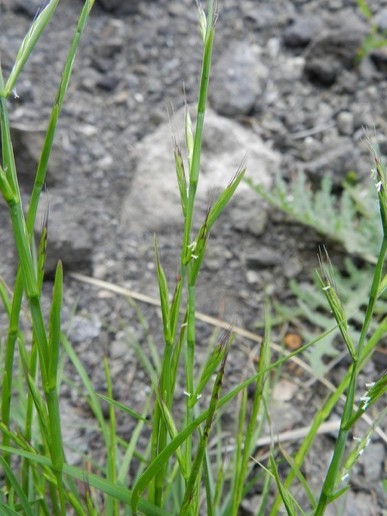
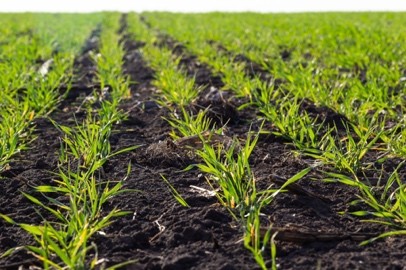
At first, they probably couldn’t tell the difference. That’s actually one of the fascinating things about this story. The weed Jesus is talking about was likely something called darnel. In its early stages it looked almost identical to wheat. You couldn’t tell them apart.
Darnel:
Wheat:
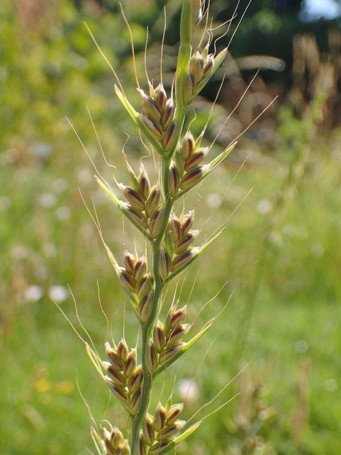
Only later when both plants matured did the difference become obvious.
Darnel:
Wheat:
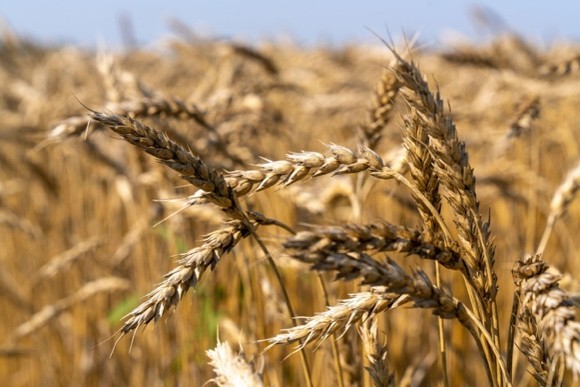
One produced grain, the other didn’t. One nourished people, the other became a problem. That little detail matters. Because sometimes what looks obvious to us actually isn’t. We tend to see people in categories. Good people. Bad people. Faithful people. Unfaithful people.
But God sees stories we don’t know. He sees hearts we can’t see. He sees what someone has been through. He sees the work His Spirit is quietly doing beneath the surface and He sees the ending while we’re still looking at the beginning.
Back to the parable. The servants are alarmed. They ask what I probably would have asked. “Master, didn’t you plant good seed?” In other words, “Something doesn’t make sense here.” “We did everything right.” “So how did this happen?” Maybe you’ve prayed that prayer. “God, I tried to follow You.” “I tried to do the right thing.” “So, how did we end up here?” Those are honest questions.
Notice that Jesus never criticizes the servants for asking. He simply answers them. “An enemy did this.” Don’t miss this! Jesus doesn’t deny that evil exists. He doesn’t pretend everything is okay. He doesn’t ask us to ignore injustice. He acknowledges that there really is an enemy. There really is brokenness and sin and there really is pain.
But then something surprising happens. The servants immediately jump to a solution. “Do you want us to go and pull them up?” Of course they do, because that’s how we think. If there’s a problem, fix it. If something’s broken, repair it. We’re problem-solvers. We like action. Waiting feels uncomfortable, irresponsible even. I think that’s especially true today. We’ve become so accustomed to instant answers. If we have a question, we just google it. If we need something we hop on Amazon and order it. If we don’t like something we toss it. Patience isn’t something our culture celebrates very often. Efficiency is. Results are.
God’s Kingdom grows differently. It’s slower. Deeper. More patient than we often expect.
One of the things I appreciate about gardening, and I say this as someone who is definitely not an expert, is that gardens refuse to be rushed. You can’t stand over a tomato plant and tell it to hurry up. You can’t water flowers twice as much and expect them to bloom tomorrow. You can’t demand growth. You can create the conditions for growth and then you wait. Sometimes I think that’s one of the hardest spiritual disciplines there is. Waiting. Not passive waiting. Not giving up. But trusting. Continuing to water. Continuing to pray and to love. Continuing to believe that God is working even when you can’t yet see the fruit.
Because if we’re honest most of us don’t struggle with believing God can work. We struggle with believing He’s working now. I wonder if that’s why I find myself identifying with the servants in this parable, because I want clarity. I want certainty. I want to know who’s right and who’s wrong. When God is finally going to step in. Maybe you can relate too.
Then Jesus puts these remarkable words into the mouth of the landowner. “No.” Don’t pull them up. Not yet. This response completely reshapes the story., doesn’t it?
The servants are ready to act.
The Master chooses restraint.
The servants see an immediate problem.
The Master sees a future harvest.
The servants are focused on what is visible.
The Master is thinking about what is hidden beneath the surface.
Think about this with me: Could it be that one of the greatest differences between us and God is not that He knows more than we do, although He certainly does, but that He’s willing to wait longer than we are?
We want quick resolutions; God is forming lasting transformation. We want the field cleaned up; God wants the harvest preserved. Those aren’t always the same thing and that’s how Jesus begins inviting us into a completely different way of seeing the world. Not through the eyes of anxious servants but through the eyes of a patient Gardener. So maybe the question this parable asks isn’t simply, “Why are there weeds?” Maybe the deeper question is this: Can we trust the One who owns the field?
I think that’s the question Jesus wants to leave sitting with us. Because if we’re honest trust is easy when the field looks healthy. Trust is much harder when it doesn’t. It’s much harder to trust Him when things feel uncertain, isn’t it? When you’ve been praying the same prayer for years. When someone you love keeps making destructive choices. When grief lingers longer than you expected. When your own heart feels tired. That’s where trust really gets tested.
And yet Jesus says something remarkable. The landowner tells his servants, “No, because while you are pulling the weeds, you may uproot the wheat with them.” I’ve read that verse so many times over the past weeks and I keep finding myself stopping there. You see, I’ve always focused on the weeds, Jesus focuses on the wheat. Those are very different priorities. The Master sees something precious. He says, “I care so deeply about the wheat that I’m willing to live with weeds for a while.” Isn’t that amazing? Sometimes God’s patience isn’t for the sake of the weeds. It’s for the protection of the wheat.
I started thinking about that this week. How many times has God protected me in ways I never recognized? How many prayers did He answer by saying “not yet”? How many doors stayed closed that I desperately wanted opened? How many seasons felt frustrating only to discover later they were actually protecting me? I suspect all of us could tell stories like that. Stories where looking back, we can finally say, “Oh, that’s what God was doing.” but we usually only see it in the rear-view mirror. Rarely in the moment.
I wonder if that’s why Scripture speaks so often about remembering. Again and again God tells His people, “Remember.” Remember how I brought you through. Remember My faithfulness. Remember My promises. Because remembering gives us courage to trust Him again. The Apostle Peter understood. Years after Jesus told this parable, Peter wrote these words: “The Lord is not slow in keeping His promise. Instead, He is patient with you, not wanting anyone to perish, but everyone to come to repentance.” Think about that. Sometimes we interpret God’s patience as inactivity. Peter calls it mercy. Every sunrise is mercy. Every opportunity to apologize is mercy. Every chance to forgive is mercy. Every time God patiently waits for someone to turn toward Him, that’s mercy. And if you’re anything like me you’re thankful God has been patient with you.
I’m grateful that God’s patience is longer than my stubbornness, but here’s where this gets uncomfortable. It’s one thing to receive God’s patience. It’s another thing to extend it. That’s much harder. Especially when someone has hurt us or when we see injustice. Our instinct is often, “God, do something.” And sometimes He does. Sometimes He intervenes dramatically, but often He keeps working quietly. Patiently. Steadily.
Can I tell you something I’ve learned in ministry? Some of the most remarkable stories of transformation are stories that almost didn’t happen. There have been people who walked away from church. People who said they were finished with God. People whose families prayed for them year after year after year. And then something changed. Not overnight. One quiet moment where God finally broke through. And today they’re walking with Jesus. If someone had pulled up the field too early they never would have seen the harvest. That’s why Jesus invites us to be incredibly careful about making final judgments about people. We see a chapter. God sees the whole book.
Spiritual growth works much the same way. God is far more patient with our growth than we are. He isn’t surprised by the places we’re still learning. He isn’t discouraged by the work that’s still unfinished. The Apostle Paul reminds us in Philippians 1:6, “He who began a good work in you will carry it on to completion…” Notice who carries the work. God does. We’re invited to cooperate, to remain faithful, but ultimately our transformation is God’s work. Now that doesn’t make us passive. It makes us hopeful. Because the outcome doesn’t rest entirely on our shoulders. It rests in the hands of the Gardener.
I wonder if some of us need to hear that today. Maybe you’ve become discouraged. Maybe you’ve looked at your own life and thought, “I should be further along.” Or you’ve looked at someone you love and wondered, “Will they ever change?” Or you’ve looked at our world and wondered, “Can anything good still grow here?” Jesus smiles, points to the field and says, “Wait.” Not because nothing is happening. But because more is happening than you can currently see. That’s the mystery of the Kingdom.
Our confidence should never be in how clean the field looks. Our confidence is in the faithfulness of the Farmer, and that’s actually where Jesus takes us next. Because after talking about a field that seems messy He immediately begins telling stories about something incredibly small. A mustard seed. A little bit of yeast. Things that almost everyone overlooks. Things that don’t seem significant at first. But Jesus says, that’s exactly how the Kingdom works; small, hidden, quiet, almost unnoticed. Until one day you realize it’s changed everything.
So, next week we’re going to discover that sometimes the greatest work God is doing isn’t the loudest, it’s the smallest. And what feels insignificant today may be exactly where the Kingdom is growing. So come back next week because I think Jesus still has something surprising to show us.
Let’s pray.
Prayer
Heavenly Father,
Today we come before You with grateful hearts, acknowledging that You are the Lord of the harvest, the One who sees the beginning from the end, the One whose wisdom is perfect and whose love never fails.
Lord, there are so many times when we wish You would move more quickly. We pray, we wait, we hope, and sometimes we wonder why the answers seem delayed. Yet today, through Your Word, You remind us that Your patience is not indifference, and Your waiting is not absence. You are always at work, even when we cannot yet see the harvest You are preparing.
Lord, teach us to trust Your timing.
We pray today for families in seasons of waiting, for couples longing for reconciliation, for families carrying burdens that few others know, for those waiting for relationships to be restored, for difficult conversations to bear fruit, or for peace to return to their homes. Give them patience that is rooted in hope and remind them that You have not forgotten them.
Lord, teach us to trust Your timing.
We lift before You those who are awaiting medical appointments, diagnoses, treatments, or test results. For those living with uncertainty, for those carrying anxiety into another doctor’s office, for caregivers who faithfully walk beside loved ones. Surround them with Your peace that surpasses understanding. Strengthen them day by day, and grant wisdom to every physician, nurse, and healthcare professional who cares for them. And where it is Your will, Lord, we ask boldly for healing.
Lord, teach us to trust Your timing.
We pray for those in our church family who are living with illness, chronic pain, grief, or weariness. Some have prayed for healing for months or even years. Others carry emotional wounds that are unseen by those around them. May they know the gentle presence of Christ beside them. May they experience Your comfort in the waiting and Your strength for each new day. Help us as a church to walk faithfully with one another, bearing one another’s burdens and reminding each other that no one waits alone.
Lord, teach us to trust Your timing.
Father, we pray for parents, grandparents, and loved ones who faithfully pray for their children. For those whose children have wandered from faith, for those navigating difficult decisions, for those carrying concerns they rarely speak aloud. Encourage them today. Remind them that You love their children even more than they do, and that Your pursuit is patient, faithful, and relentless. May they never lose hope in the work You continue to do, even when they cannot yet see it.
Lord, teach us to trust Your timing.
And Father, we pray for those whose greatest burden is spiritual. Each of us can think of someone, a family member, a friend, a neighbour, a coworker, who does not yet know the hope of Jesus Christ. We confess that sometimes we become discouraged when we don’t see change. Forgive us when we are tempted to give up praying or stop believing that You are still working. Today we place those names before You once again. Continue to soften hearts. Continue to open doors. Continue to draw people to Yourself. Help us to trust that even when we cannot see it, Your Spirit is at work in ways beyond our understanding.
Lord, teach us to trust Your timing.
Father, as we look around our world, there are many places where the field seems full of weeds, places marked by violence, injustice, division, and suffering. Remind us that You have not abandoned Your creation. Your Kingdom is still growing. Your grace is still transforming lives. Your harvest is still coming. Until that day, make us faithful people. People who continue to sow love instead of bitterness. Hope instead of despair. Mercy instead of judgment. Patience instead of fear. May our lives reflect the heart of our patient Savior, who never gave up on us and who continues His work until the day He makes all things new. We ask all of this in the strong and faithful name of Jesus Christ, our Lord. Amen.
Song
Benediction
As you go this week, remember: The field may look messy, but the Gardener has not abandoned it. What God has planted, He will bring to harvest. Continue to sow goodness. Continue to pray faithfully. Continue to love generously. Continue to trust patiently. And may the God whose mercy is greater than our impatience, whose wisdom is higher than our understanding, and whose Kingdom is quietly growing among us, grant you peace as you wait and faith as you serve. Go in the grace of our Lord Jesus Christ, the love of God, and the fellowship of the Holy Spirit. Amen.